


Business Context for Your Lakehouse
If your metadata tools still don't stop two departments from arguing whose number or term is right, you're not alone. That gap is common among customers building AI governance on top of their storage layer.
Databricks is where your data lives--catalogs, schemas, and lineage, all governed well. But lakehouses and catalogs were not purpose-built for managing the lifecycle of evolving business context--the semantic control center that decides whether an answer built on that data is correct. Which is why AI is still sidelined by questions like which definition applies when, what hierarchy does this number roll up through, or who approved the last change?
This session will address how to cultivate a governed layer on top of Databricks with TopQuadrant to quick-start true business context for AI, using the metadata you already have in Unity Catalog.
Watch now.
Watch on demand.
Built for industries that can't be wrong. Scaled for those that choose to be right.
This session will review areas where Databricks customers are layering in a context management platform built for the job.
Where Databricks and TQ Data Foundation each carry the weight and why regulated industries treat that division as non-negotiable
Meet your speakers
Amar Doshi
Amar Doshi leads the Product and Delivery teams at TopQuadrant, where he is focused on helping enterprises establish governed semantic foundations for AI-ready data. With deep expertise in enterprise data governance and industry experience honed at Deloitte Consulting, Amar works closely with customers operating in highly regulated industries such as pharma, financial services, and government, navigating the shift from fragmented reference data to authoritative, reusable enterprise context. He is a frequent voice on the intersection of knowledge graphs, AI readiness, and the evolving role of semantic infrastructure in modern data architectures.
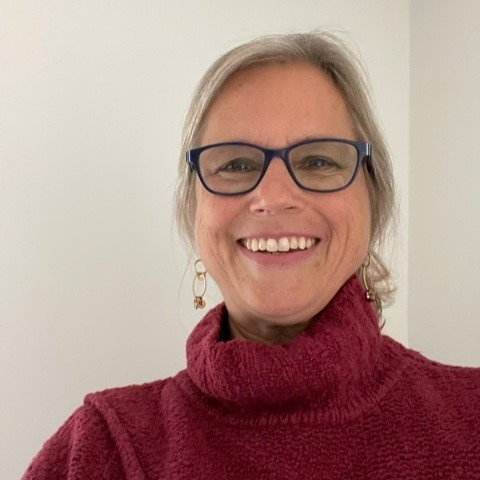
Brenda Cass
Brenda is a Product Manager at TopQuadrant, working on the company's context management platform across ontology-backed solutions. Brenda's role focuses on helping organizations turn fragmented semantic assets into a governed data foundation that human and AI systems can depend on to provide authoritative context.
Brenda holds an MS in Information Technology from Rensselaer Polytechnic Institute, a hub for semantic research. Before TopQuadrant, Brenda held roles at GE and EBSCO, building hands-on experience with the commercial applications of data science, architecture, and engineering.
Steve Hedden
Steve’s expertise is at the intersection of developing products and demonstrating technical value for the TopQuadrant Data Foundation platform, focusing on practical applications of semantic context for AI using knowledge graphs. Steve previously led product initiatives at S&P Global, where he built ontology-backed systems at Fortune 50 scale. Steve is a member of the W3C Advisory Committee, helping to champion open standards and interoperability so that customers can own their own context and future-proof their data and AI architecture.
Laurie Nelsen
Laurie helps customers build technical and business solutions to enable enterprise context. She has a background in library science and information architecture. Before joining TopQuadrant, Laurie was a Sr. Ontologist at Mayo Clinic, and brings her practical expertise in life sciences (early adopters of semantic data systems) to enterprises building their ontologies, taxonomies, knowledge graphs and semantic layers.
60 minutes. No filler.
Cultivate a governed layer on top of Databricks using the metadata you already have in Unity Catalog to quick-start your next context management or ontology use case.
Welcome + speaker intros
What Databricks governs well vs. the business-context gap it leaves open
How TQ Data Foundation adds authored, versioned, audit-ready context on top of Unity Catalog metadata
Two real-world patterns: finance and pharma
Live Q&A
Why organizations trust TQ
Two decades of enterprise semantic infrastructure, built before "knowledge graph" was a buzzword.
From teams who've done it
The people who turned scattered semantic assets into governed, AI-ready context.
"We had ontologies, terminology files, and metadata standards scattered across 12 teams. TQ turned it into something we could actually govern and build on."
"This went far beyond the usual webinar. No fluff, just the real questions answered directly. It reshaped how we think about our data assets."
"Within six months, our AI teams stopped asking where the authoritative definitions lived. That alone was worth it."